
Kinesiology Taping in Nairobi: What the Colourful Tape Really Does
You have probably seen it at the Nairobi Marathon, on the shoulders of rugby players at the RFUEA ground, or on a friend’s knee after a weekend football match: strips of bright blue, pink or black tape stuck on in unusual patterns. Some people assume it is a fashion statement. Others think it is a magic fix for pain.
The truth sits somewhere in between. Kinesiology taping is a useful tool that physiotherapists use alongside hands-on treatment and exercise. Used well, it can make you more comfortable while you move and recover. Here is what it is, how it works, who it can help, and what to expect when you are taped at Stellar Physio.
What is kinesiology tape? Kinesiology tape is a thin, stretchy cotton tape with a heat-activated, skin-friendly adhesive on one side. It was developed in Japan in the 1970s and became widely known after athletes started wearing it at international events.
Unlike the rigid white sports tape used to lock an ankle in place, kinesiology tape stretches and moves with your body. It is designed to support muscles and joints without stopping them from working, so you can keep walking, training or getting through your workday while you wear it. A single application can usually stay on for three to five days. It is water-resistant, so you can shower with it on.
How does kinesiology taping work? Research into kinesiology tape is still developing, and results vary from person to person. What physiotherapists generally see, and what many patients report, falls into a few areas:
- **Comfort while moving:** The tape gently lifts and stimulates the skin. This extra sensory input can change how you feel pain in the area, which helps some people move more freely.
- **Support without restriction:** Applied along a muscle, the tape gives light, steady support to tired or overworked tissue while still letting the joint move through its full range.
- **Better body awareness:** Feeling the tape on your skin reminds you how you are moving. This is helpful when you are retraining posture or learning to control a knee, hip or shoulder correctly.
- **Managing swelling:** Special fan-shaped applications are sometimes used around bruising or mild swelling to encourage fluid to move away from the area.
The key point: taping works best as part of a full treatment plan, not on its own. It supports the work you do with your physiotherapist. It does not replace it.
Who can kinesiology taping help? We use kinesiology tape with a wide range of patients across our Ngong Road, Parklands and Karen clinics, including:
- Runners and footballers with tight or overworked hamstrings, calves, hips or glutes
- Rugby, tennis and golf players who need shoulder, elbow or lower back support while they keep training
- People with hip or buttock pain, including tightness around the glutes and conditions such as piriformis syndrome
- Anyone with knee pain around the kneecap, especially when climbing stairs or running downhill
- Office workers with neck, shoulder or lower back pain who need a reminder to sit and stand well
- People recovering from injury or surgery, once their physiotherapist agrees it is safe to tape the area
If you are dealing with a recent sports injury, taping is often one part of a wider plan that may also include manual therapy, sports massage and stretch and exercise therapy.
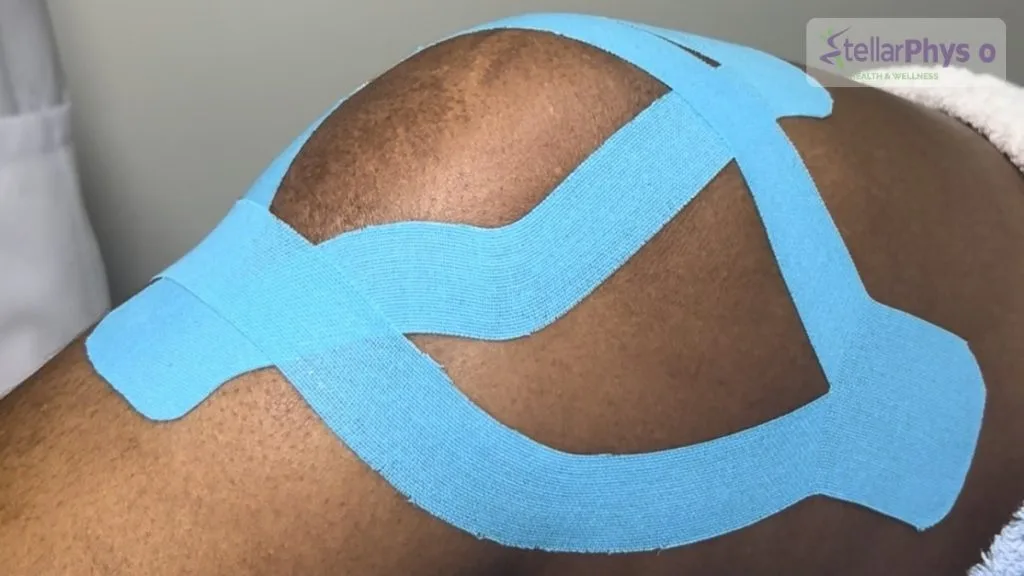
Taping the hip and glutes: a closer look The glutes are some of the biggest and most important muscles in the body. They keep your pelvis level when you walk, power you up hills and stairs, and protect your knees and lower back when you run, jump or change direction.
When these muscles are weak, tired or irritated, the effects often show up somewhere else, such as knee pain, lower back pain or a nagging ache down the side of the hip. Taping the area can give the muscles light support and a helpful sensory cue while you work on strengthening them. Many people say the tape helps them feel more “switched on” through the hip during their exercises.
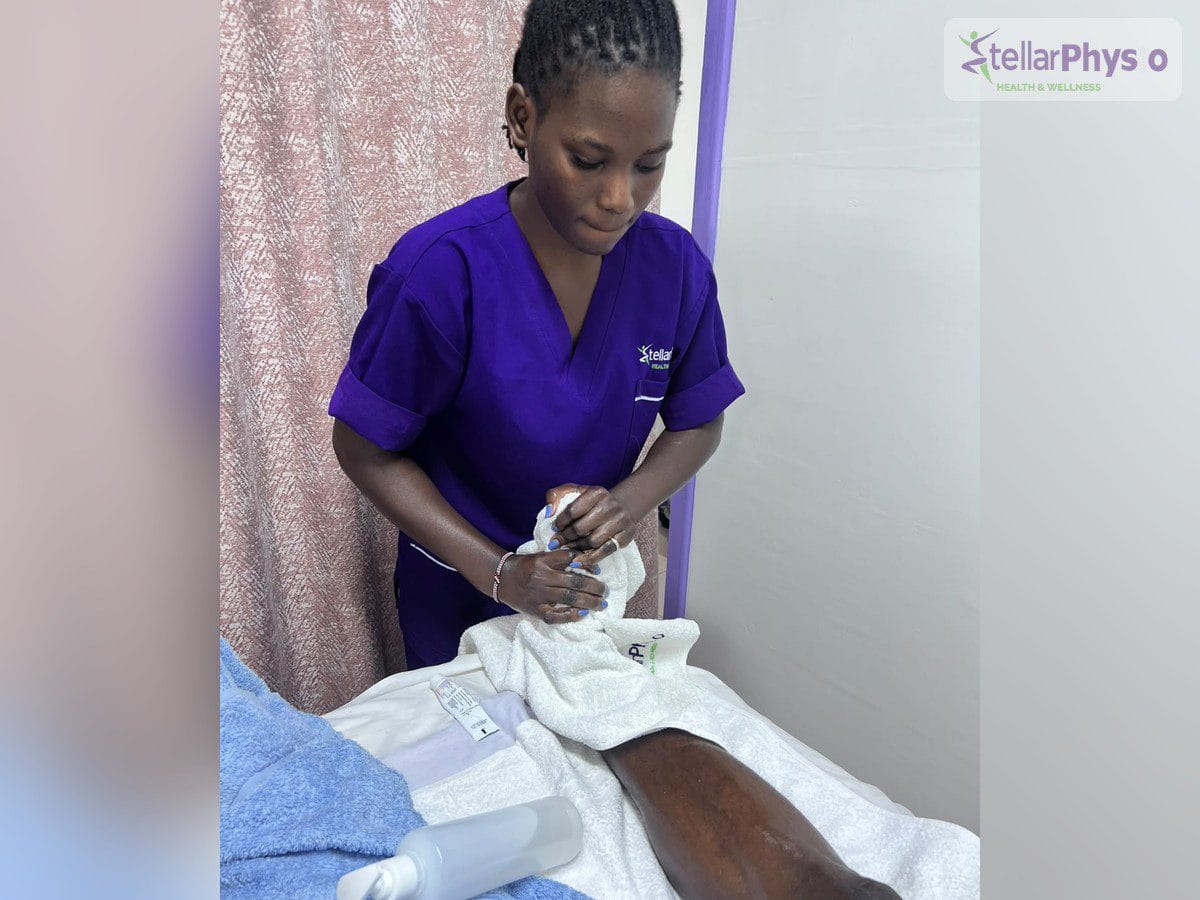
What to expect at your taping session - **Assessment first:** Your physiotherapist checks how you move, where the pain or weakness is coming from and whether taping is right for you. We never tape without understanding the problem first. - **Skin preparation:** The area needs to be clean, dry and free of lotion or oil so the tape sticks well. Very hairy areas may need a quick trim. - **Application:** The tape is cut to shape and applied with a specific amount of stretch, depending on what we want it to do. The pattern you end up with is chosen for your body, not copied from the internet. - **Movement check:** We ask you to move, walk or perform a simple task to make sure the tape feels comfortable and helpful. - **Aftercare advice:** You will get simple instructions on how long to keep it on and how to remove it.
How to look after your tape - Avoid showering, swimming or heavy sweating for about an hour after application, so the adhesive can set. - Pat the tape dry after showering. Do not rub it or use a hairdryer on high heat. - Press down any corners that start to lift, and trim loose ends rather than pulling them. - Remove the tape slowly in the direction of hair growth, holding your skin down as you go. Baby oil can help loosen it. - Take the tape off straight away if you notice itching, redness, blistering or increased pain, and let your physiotherapist know.
When kinesiology taping is not recommended Taping is safe for most people, but it is not suitable for everyone. Your physiotherapist will usually avoid taping over:
- Open wounds, cuts, burns or fragile skin
- Areas with a known or suspected blood clot (deep vein thrombosis)
- Skin with an active infection or a known allergy to adhesives
- Areas of reduced sensation, for example in some people with diabetes, unless it has been carefully assessed
Can I tape myself at home? You can buy kinesiology tape in Nairobi pharmacies and sports shops, and many online videos show you how to apply it. The challenge is that the same strip of tape can do quite different things depending on where it is placed and how much it is stretched. Taping the wrong area, or taping over a problem that actually needs medical attention, can delay your recovery.
Our advice: let a physiotherapist assess you and show you the right application first. If it suits you, we can teach you, or someone at home, how to reapply it safely between visits.
Book kinesiology taping at Stellar Physio Whether you are training for your next race, getting back to the pitch after an injury, or simply tired of that nagging hip, knee or back pain, our physiotherapy team can assess you and decide whether taping should be part of your plan. Visit us at Kenital Plaza, Ngong Road, Parklands Sports Club or Karen Country Club, or book your assessment online.
Related Videos
Kinesiology Taping in Nairobi